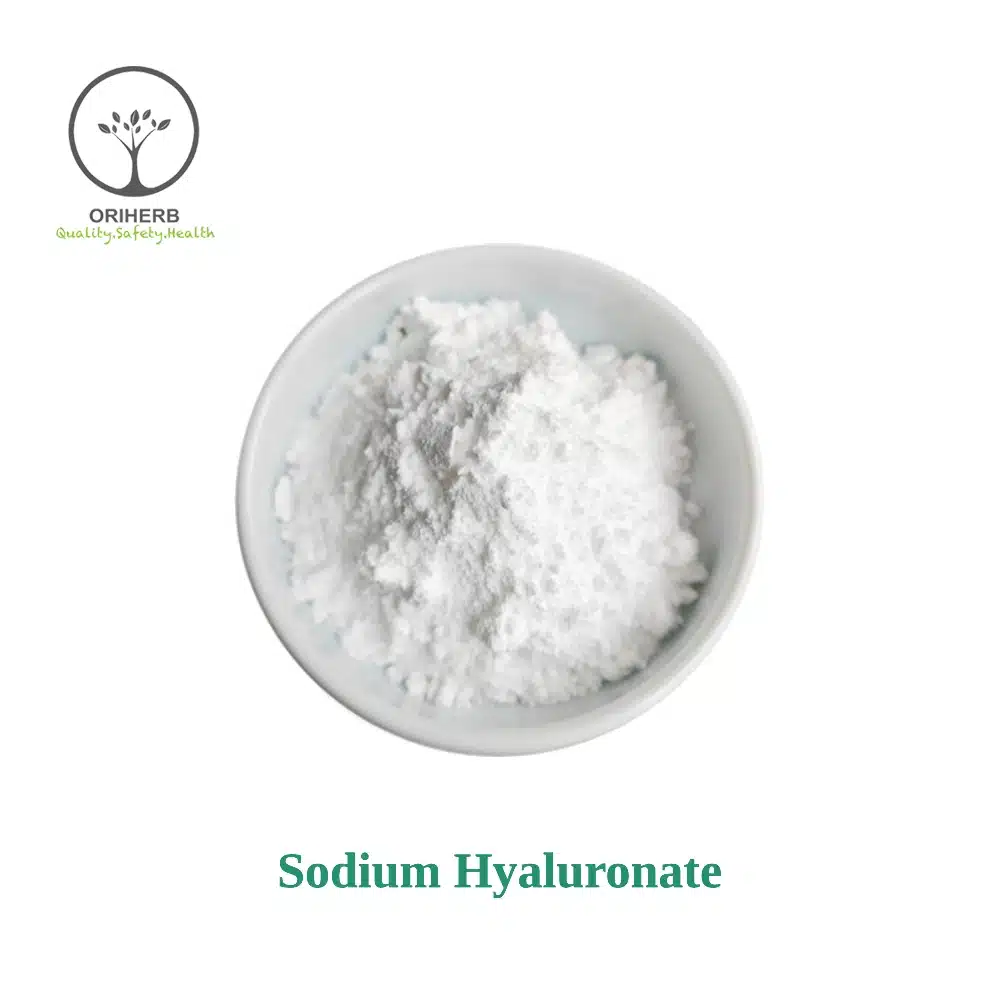
Sodium Hyaluronate is the sodium salt form of hyaluronic acid, a naturally occurring glycosaminoglycan found in the extracellular matrix of connective tissues. Due to its excellent water-binding capacity and biocompatibility, it is widely applied in cosmetics, pharmaceuticals, and nutraceuticals.
Cosmetics & Skincare: Provides deep hydration, enhances skin elasticity, reduces fine lines and wrinkles.
Joint Health: Acts as a natural lubricant in synovial fluid, supporting cartilage health and reducing stiffness.
Medical & Ophthalmic Use: Applied in eye drops, wound healing gels, and surgical aids.
🌊 Deep Hydration – retains up to 1,000 times its weight in water
🌟 Anti-aging effect – improves skin texture & elasticity
🦴 Joint protection – cushions cartilage and reduces inflammation
👁️ Ophthalmic use – lubricates eyes, reduces dryness and irritation
✅ Safe & Biocompatible – non-toxic, non-immunogenic, non-GMO
Produced via fermentation of non-GMO raw materials
Multiple molecular weight grades available (low, medium, high MW)
High purity, no residual organic solvents
Conforms to USP, EP, JP standards
Certified Halal, Kosher, ISO, GMP
| Specification | Qualified Testing Result | Actual Testing Result | Test Method |
|---|---|---|---|
| Part 1. Physical & Chemical Analysis | |||
| Appearance | White to off-white powder | Complied | Visual |
| Solubility | Freely soluble in water | Complied | USP |
| Assay (HPLC) | ≥95.0% | 96.3% | HPLC |
| Molecular Weight | 10 kDa – 2,000 kDa (as required) | Complied | GPC |
| Moisture | ≤10.0% | 6.2% | USP <731> |
| pH (0.1% solution) | 5.0 – 8.5 | 6.7 | USP |
| Part 2. Heavy Metal Analysis & Chemical Control | |||
| Total Heavy Metals | ≤10 ppm | Complied | AAS |
| Lead (Pb) | ≤1 ppm | <0.1 ppm | ICP-MS |
| Arsenic (As) | ≤1 ppm | <0.1 ppm | ICP-MS |
| Cadmium (Cd) | ≤1 ppm | <0.05 ppm | ICP-MS |
| Mercury (Hg) | ≤0.1 ppm | <0.01 ppm | ICP-MS |
| Part 3. Microbiological Analysis & Control | |||
| Total Plate Count (cfu/g) | ≤1,000 | <100 | USP <61> |
| Yeast & Mold (cfu/g) | ≤100 | <10 | USP <61> |
| E. coli | Negative | Negative | USP <62> |
| Salmonella (per 25 g) | Negative | Negative | USP <62> |
Skin hydration serums, creams, and masks
Dietary supplements for joint & skin health
Injectable formulations in medical aesthetics
Eye drops & ophthalmic gels
Wound healing dressings
Q: Is sodium hyaluronate the same as hyaluronic acid?
A: They are functionally very similar but not identical. Sodium Hyaluronate is the salt form of Hyaluronic Acid (HA). The key difference is that Sodium Hyaluronate has a smaller molecular size, which allows it to penetrate the skin more deeply and is also more stable, making it the preferred form for many skincare and supplement products.
Q: How is sodium hyaluronate made?
A: It is produced through a controlled biofermentation process. Specific bacterial strains (often Streptococcus zooepidemicus) are cultivated in a nutrient-rich medium where they naturally produce and excrete hyaluronic acid. This is then purified and stabilized into the sodium salt form (Sodium Hyaluronate). This is a modern, sustainable, and consistent method.
Q: Is sodium hyaluronate an active ingredient?
A: Yes, absolutely. It is a highly effective active ingredient. Its primary function is to act as a powerful humectant, meaning it can attract and hold up to 1,000 times its weight in water. This makes it exceptionally effective for hydrating the skin from within when taken orally and for plumping and moisturizing the skin when applied topically.
Q: Is sodium hyaluronate natural?
A: The molecule itself is identical to the hyaluronic acid found naturally in the human body. While it can be derived from animal tissues (like rooster combs), the vast majority used in cosmetics and supplements today is bio-fermented, making it a nature-identical ingredient produced in a clean, controlled, and sustainable laboratory environment.
Q: Is sodium hyaluronate vegan?
A: It can be. The critical factor is the source. Sodium Hyaluronate produced via biofermentation from bacterial sources is 100% vegan. Always check with the manufacturer or look for products explicitly labeled “vegan” to be certain, as some older methods may use animal-derived sources.
It is crucial to consult with a healthcare professional to determine the correct dosage for your specific health status.
1kg/aluminium foil bag, with two plastic bags inside.
Gross Weight: 1.5kg Size: 18cmxH27cm
25kg/fiber drum, with two plastic bags inside.
Gross Weight: 28kg Size: 42cmxH52cm Volume: 0.0625mg/Drum.

DHL / FEDEX / EMS / E-PACKET / BY AIR / BY SEA
1. ≤50kg, Express delivery(DHL /FEDEX) recommended, usually called as DDU service;
2. ≤500kg, Air shipping recommended, usually called as CIF service;
3. >500kg, sea shipping recommended, usually called as FOB, CFR, or CIF service;
4. For high value products, please select air shipping and express delivery for safe.