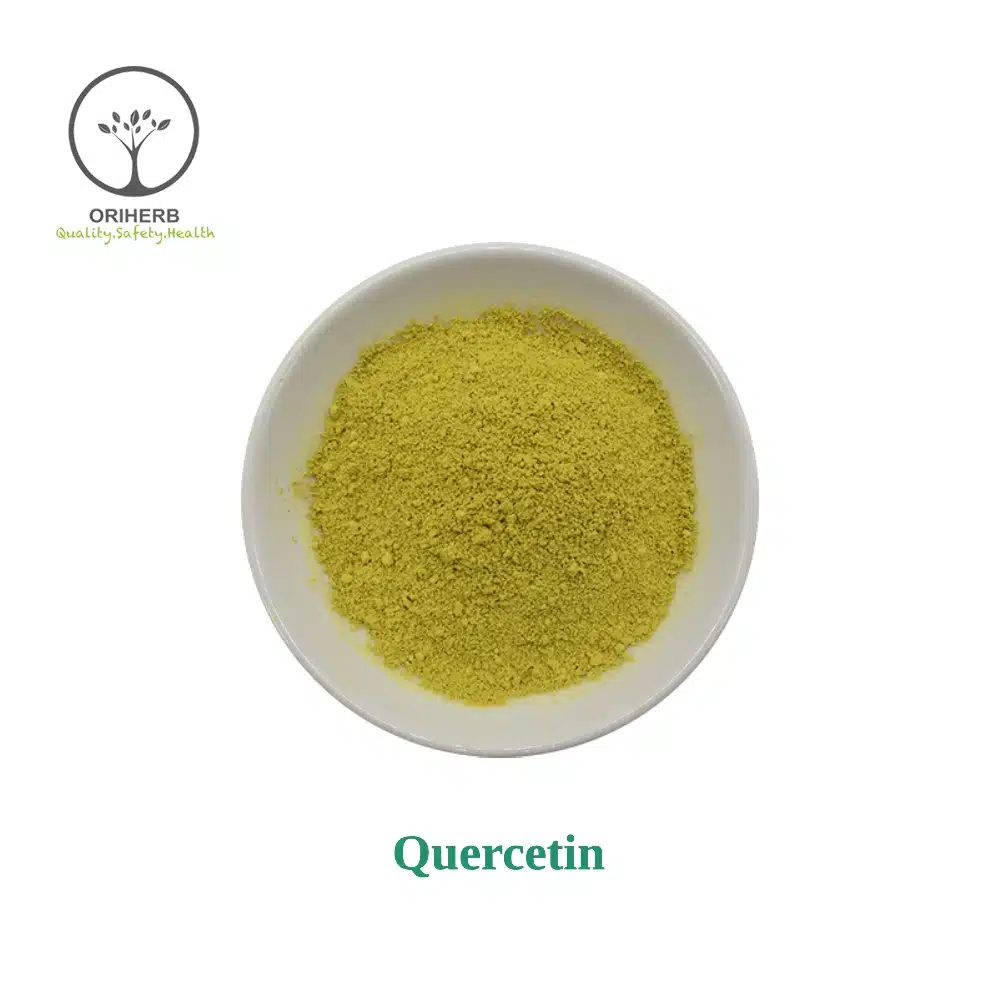
Quercetin Powder is a natural flavonoid compound found in many fruits, vegetables, and plants, particularly rich in Sophora japonica flower buds. Known for its powerful antioxidant, anti-inflammatory, and immune-modulating properties, quercetin is widely used in dietary supplements, functional foods, cosmetics, and pharmaceuticals.
Potent antioxidant: Neutralizes free radicals and protects cells
Supports cardiovascular health: Improves vascular function & circulation
Immune system booster: Enhances natural defense against infections
Anti-inflammatory activity: Helps reduce chronic inflammation
Potential anti-aging effects: Supports healthy aging & cellular function
High purity ≥95% (HPLC)
Extracted from natural Sophora japonica buds
Non-GMO, Vegan, Allergen-Free
Produced under GMP, ISO, HACCP certifications
Stable global supply with COA & third-party testing
| Specification | Qualified Testing Result | Actual Testing Result | Test Method |
|---|---|---|---|
| Part 1. Physical & Chemical Analysis | |||
| Appearance | Yellow crystalline powder | Complied | Visual |
| Odor & Taste | Characteristic | Complied | Organoleptic |
| Assay (HPLC) | ≥95.0% | 96.2% | HPLC |
| Melting Point | 305–315°C | 312°C | USP |
| Loss on Drying | ≤5.0% | 2.1% | USP <731> |
| Residue on Ignition | ≤0.5% | 0.08% | USP <281> |
| Part 2. Heavy Metal Analysis & Chemical Control | |||
| Total Heavy Metals | ≤10 ppm | Complied | AAS |
| Lead (Pb) | ≤3 ppm | <1 ppm | ICP-MS |
| Arsenic (As) | ≤1 ppm | <0.1 ppm | ICP-MS |
| Cadmium (Cd) | ≤1 ppm | <0.05 ppm | ICP-MS |
| Mercury (Hg) | ≤0.1 ppm | <0.01 ppm | ICP-MS |
| Part 3. Microbiological Analysis & Control | |||
| Total Plate Count (cfu/g) | ≤1,000 | <100 | USP <61> |
| Yeast & Mold (cfu/g) | ≤100 | <10 | USP <61> |
| E. coli | Negative | Negative | USP <62> |
| Salmonella (per 25 g) | Negative | Negative | USP <62> |
Dietary supplements for immune & cardiovascular support
Functional beverages & health foods
Anti-aging & antioxidant formulations
Cosmetics & skincare (anti-inflammatory, brightening)
Pharmaceutical research & applications
Q: What is the best form of quercetin to take?
A: For superior absorption, Quercetin Phytosome® (quercetin bound to phospholipids) is clinically proven to have the highest bioavailability. A close and more accessible alternative is Quercetin Dihydrate, the standard, well-researched form. Avoid plain “quercetin” without a specification, as it may be less absorbable.
Q: How to take quercetin powder?
A: Mix the recommended serving (typically 500-1000 mg) with a beverage. For best absorption, take it with a source of fat (like a spoonful of oil or with a meal) and/or with Vitamin C or Bromelain, as these can enhance its bioavailability and effectiveness.
Q: Which is better, CoQ10 or quercetin?
A: They are not competitors; they are a powerful team with different primary roles:
CoQ10: Essential for cellular energy production (especially in the heart and muscles) and acts as a fat-soluble antioxidant.
Quercetin: A potent anti-inflammatory and antiviral flavonoid that also supports immune function and acts as a water-soluble antioxidant. For comprehensive cellular and cardiovascular health, taking them together is ideal.
Q: Which food is highest in quercetin?
A: Capers and raw elderberries are among the absolute richest sources. Other excellent dietary sources include:
Onions (especially red and yellow)
Kale
Broccoli
Apples (with the skin)
Berries
Q: What are the symptoms of low quercetin?
A: There is no official “deficiency” for quercetin like there is for vitamins. However, a diet consistently low in flavonoids like quercetin may contribute to:
Increased susceptibility to inflammation
Weaker antioxidant defense against oxidative stress
Less robust immune response Ensuring adequate intake through diet or supplements helps support the body’s natural resilience in these areas.
1kg/aluminium foil bag, with two plastic bags inside.
Gross Weight: 1.5kg Size: 18cmxH27cm
25kg/fiber drum, with two plastic bags inside.
Gross Weight: 28kg Size: 42cmxH52cm Volume: 0.0625mg/Drum.

DHL / FEDEX / EMS / E-PACKET / BY AIR / BY SEA
1. ≤50kg, Express delivery(DHL /FEDEX) recommended, usually called as DDU service;
2. ≤500kg, Air shipping recommended, usually called as CIF service;
3. >500kg, sea shipping recommended, usually called as FOB, CFR, or CIF service;
4. For high value products, please select air shipping and express delivery for safe.