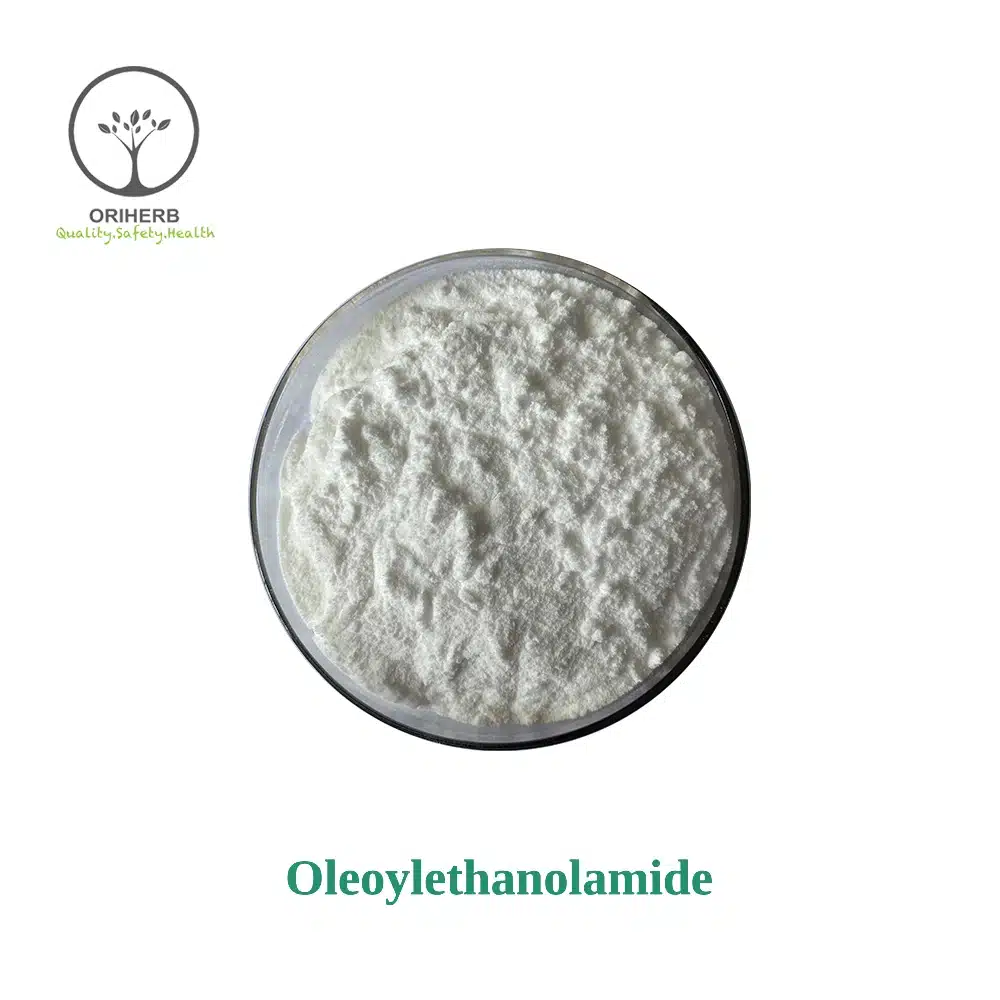
Oleoylethanolamide (OEA) is a naturally occurring lipid mediator derived from oleic acid and produced in the small intestine. It regulates satiety, lipid metabolism, and body weight through activation of PPAR-α (Peroxisome Proliferator-Activated Receptor alpha).
Scientific research highlights OEA as a safe and effective nutraceutical for appetite suppression, fat metabolism, and weight control without stimulating the central nervous system.
🍽️ Appetite Regulation – Enhances satiety signals, reduces overeating
🔥 Fat Metabolism – Stimulates lipid breakdown and energy utilization
⚖️ Weight Management – Supports body weight reduction programs
🧠 Non-Stimulant – No jitters, cardiovascular safety compared to synthetic stimulants
High Purity (≥98%) confirmed by HPLC
GMP & ISO certified production
Safe & natural alternative to stimulant-based weight loss compounds
Full regulatory support: COA, MSDS, stability studies
| Specification | Qualified Testing Result | Actual Testing Result | Test Method |
|---|---|---|---|
| Part 1. Physical & Chemical Analysis | |||
| Appearance | White to off-white crystalline powder | Complied | Visual |
| Odor | Characteristic | Complied | Organoleptic |
| Assay (HPLC) | ≥98.0% | 98.9% | HPLC |
| Loss on Drying | ≤1.0% | 0.14% | USP <731> |
| Residue on Ignition | ≤0.1% | 0.03% | USP <281> |
| pH (1% solution) | 6.0–8.0 | 7.1 | USP |
| Part 2. Heavy Metal Analysis & Chemical Control | |||
| Total Heavy Metals | ≤10 ppm | Complied | AAS |
| Lead (Pb) | ≤3 ppm | <1 ppm | ICP-MS |
| Arsenic (As) | ≤1 ppm | <0.1 ppm | ICP-MS |
| Cadmium (Cd) | ≤1 ppm | <0.05 ppm | ICP-MS |
| Mercury (Hg) | ≤0.1 ppm | <0.01 ppm | ICP-MS |
| Part 3. Microbiological Analysis & Control | |||
| Total Plate Count (cfu/g) | ≤1,000 | <100 | USP <61> |
| Yeast & Mold (cfu/g) | ≤100 | <10 | USP <61> |
| E. coli | Negative | Negative | USP <62> |
| Salmonella (per 25 g) | Negative | Negative | USP <62> |
Nutraceuticals: Weight management capsules, fat metabolism enhancers
Functional Foods: Appetite-control ingredients in health snacks
Sports Nutrition: Fat reduction and body composition formulas
Pharmaceutical R&D: Metabolic & obesity treatment research
Q: Is oleoylethanolamide safe?
A: Current research indicates that OEA is generally safe and well-tolerated at recommended dosages. As a lipid that is naturally produced in your body, it has a high safety profile. No significant adverse effects have been reported in human studies, though high doses may cause mild digestive discomfort. As with any new supplement, it is prudent to consult a healthcare provider.
Q: What is OEA good for?
A: OEA is a potent endogenous lipid with several key benefits:
Appetite Regulation: It is best known for promoting feelings of fullness (satiety), supporting healthy weight management.
Metabolic Health: It helps boost fat oxidation and support healthy lipid metabolism.
Cognitive Support: It may enhance memory and learning processes.
Anti-inflammatory Effects: It helps modulate the body’s inflammatory response.
Q: What foods are high in oleoylethanolamide?
A: OEA itself is not directly found in food in significant amounts. Instead, your body produces it on demand from dietary oleic acid. Therefore, the best way to support your body’s natural OEA production is to consume foods rich in oleic acid, such as:
Olive Oil
Avocados & Avocado Oil
Nuts (especially Almonds and Macadamia Nuts)
Seeds
Q: Where does OEA come from?
A: OEA is an endogenous compound, meaning it is naturally produced by your body, primarily in the small intestine. It is synthesized from oleic acid (a dietary fat) in response to feeding. It can also be produced in supplement form for targeted benefits.
Q: What is the purpose of the OEA?
A: OEA acts as a key signaling molecule with a primary purpose of managing energy balance. Its main roles are to:
Signal Satiety to the Brain: Telling your body you are full after a meal.
Stimulate Fat Breakdown: Mobilizing stored fat for energy.
Support Metabolic Homeostasis: Helping to maintain stable energy levels and nutrient metabolism.
1kg/aluminium foil bag, with two plastic bags inside.
Gross Weight: 1.5kg Size: 18cmxH27cm
25kg/fiber drum, with two plastic bags inside.
Gross Weight: 28kg Size: 42cmxH52cm Volume: 0.0625mg/Drum.

DHL / FEDEX / EMS / E-PACKET / BY AIR / BY SEA
1. ≤50kg, Express delivery(DHL /FEDEX) recommended, usually called as DDU service;
2. ≤500kg, Air shipping recommended, usually called as CIF service;
3. >500kg, sea shipping recommended, usually called as FOB, CFR, or CIF service;
4. For high value products, please select air shipping and express delivery for safe.